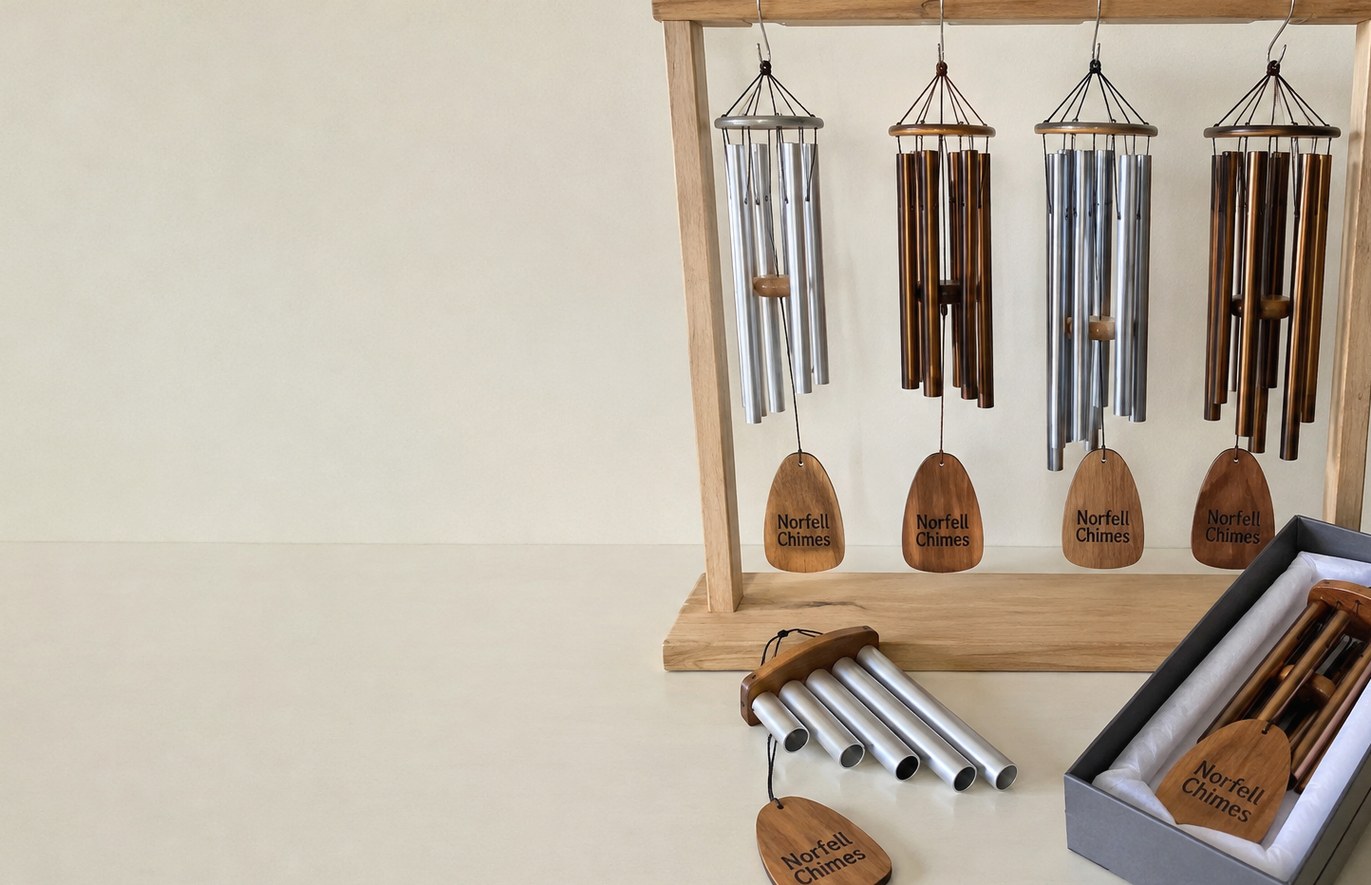
Custom wind chimes, tuned to order.
We make custom wind chimes — tuned aluminum chords, memorial and wedding pieces, corporate sails, honest bamboo and garden-centre programmes — with node-drilled tubes, centred strikers and your words engraved on the sail, from 12 up (and one at a time for memorials).
Free custom artwork in 24 hours · Low price guarantee
Every style, one supplier
Pick a style below, and we will provide free design help and a mockup within 24 hours.
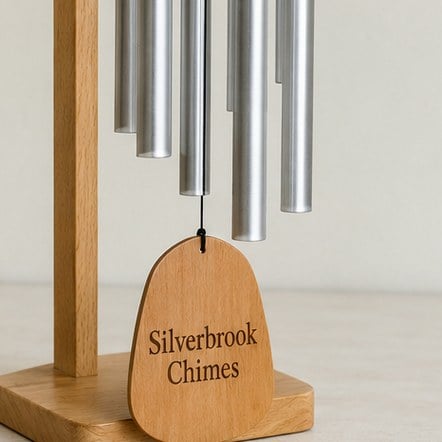
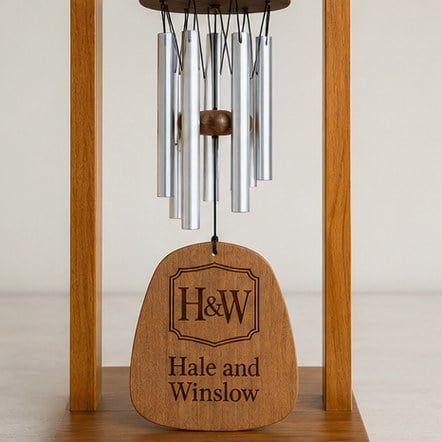
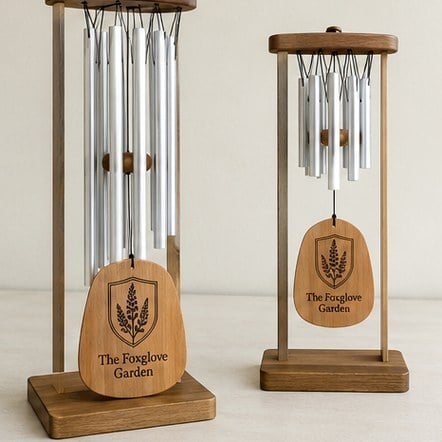
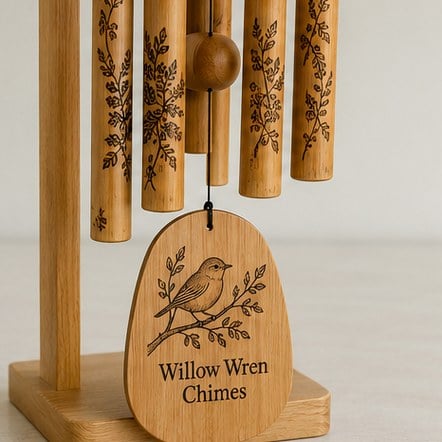
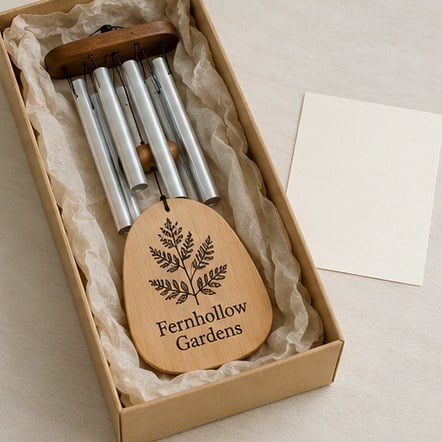
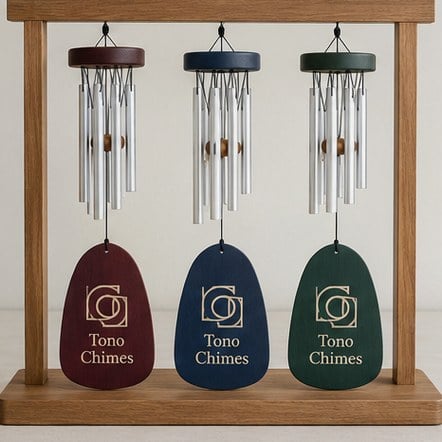
Retail & Garden Centre Programmes
Your house chime line, held on file, reordered by the case.
Learn MoreA wind chime hangs on a porch for years and gets heard every day. Put your name on the one they keep.
Four steps from your logo to fully branded wind chimes
Send your brand
Brand name, logo file, colors, and product preference. No print-ready art? Send a photo or PDF — our designers rebuild it clean and print-ready.
Mockup in 24 hours
We send free design directions rendered on your wind chimes. Revise as many times as you need — always free until you’re happy.
Approve & pay
Lock the design, confirm quantity and options, then pay. Production starts the same day.
Ship in 2 weeks
Standard production ships in about two weeks — faster turnaround available with express shipping.
Made for the moments that matter
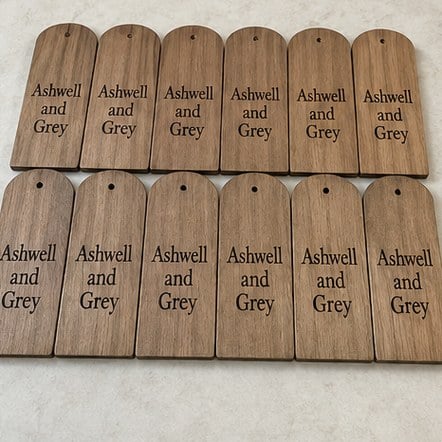
Memorials & Remembrance
A name on the sail, a gentle chord in the garden — proofed with care.
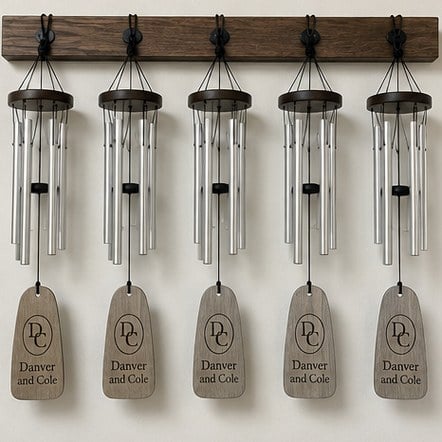
Weddings & Occasions
Dates and names engraved, boxed to be handed over, tuned to be kept.
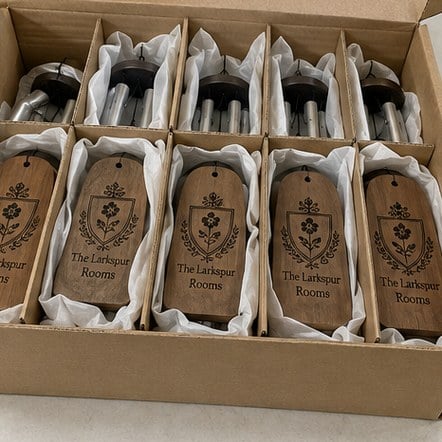
Corporate & Client Gifts
The branded gift that gets hung on a porch, not lost in a drawer.
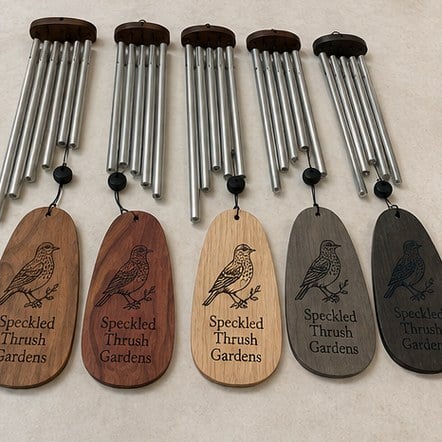
Garden Centres & Gift Retail
House lines on a chord ladder, held on file, reordered by the case.
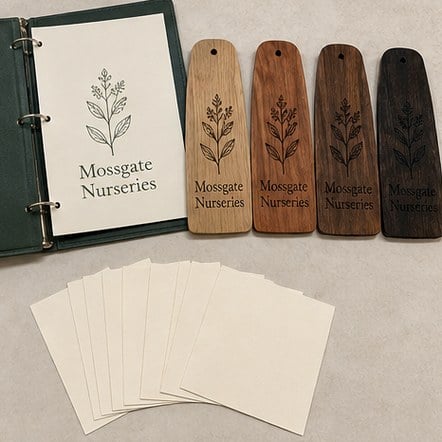
Resorts, Spas & Venues
The property’s sound, on the veranda and in the gift shop.
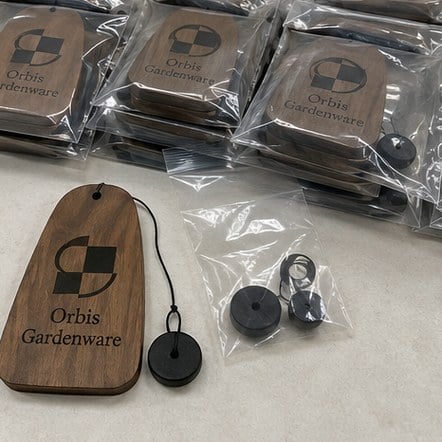
Funeral Homes & Hospices
A dignified memorial programme with exact proofs and direct shipping.
Loved by the brands that order them
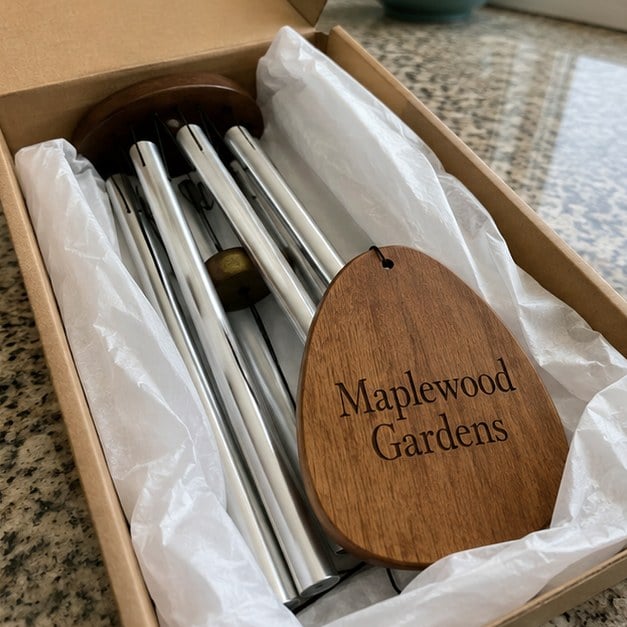
“The chord was named on the quote. It arrives and it is actually that chord.”
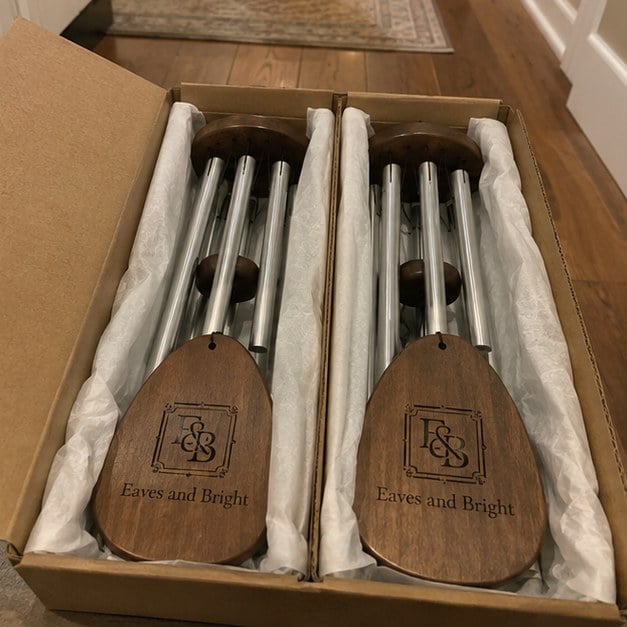
“Mom’s name on the sail, dates perfect, proof checked twice. It rings gently.”
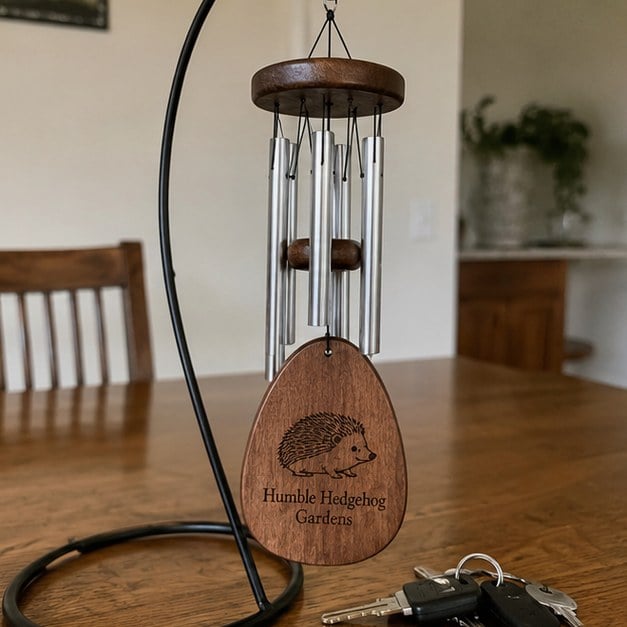
“They refused to engrave the tubes and explained why. The sail looks better anyway.”
Your brand, out in the world
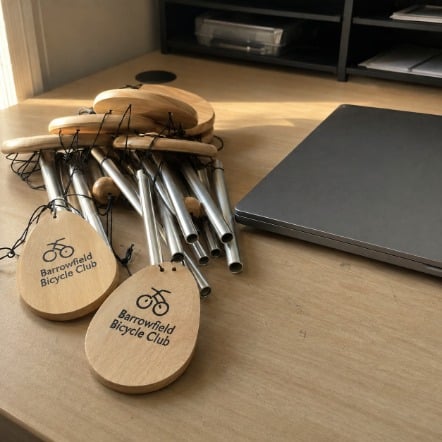
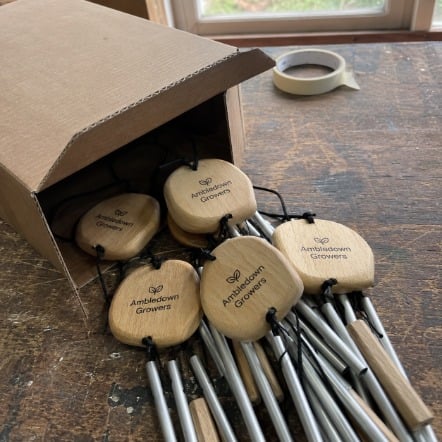
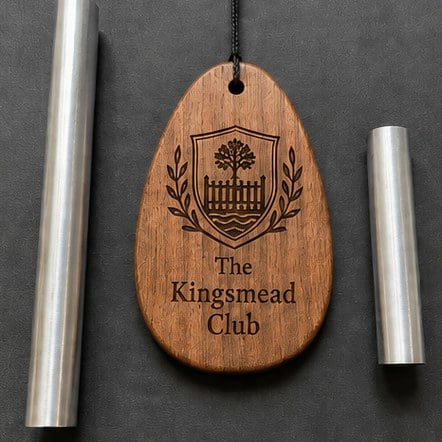
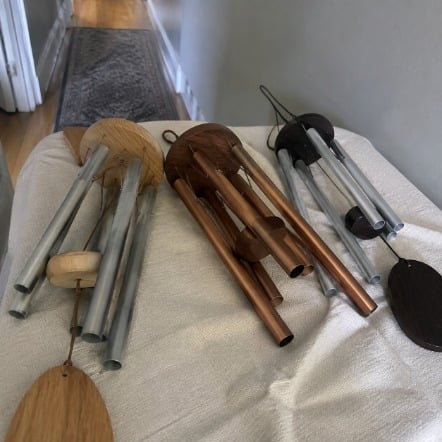
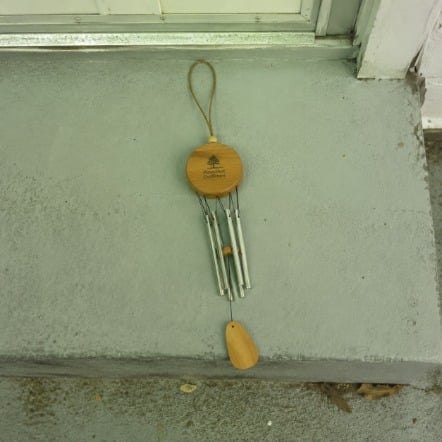
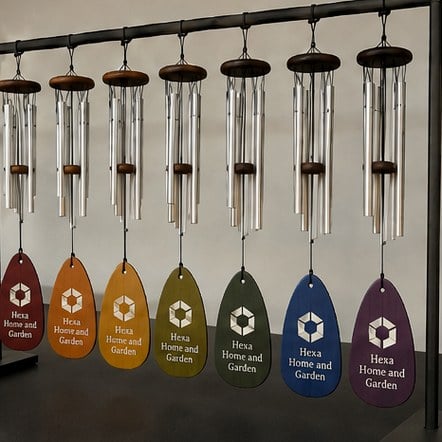
Get your mockup and quote within one business day.
Questions buyers ask before ordering
What is the minimum order?
How fast will my wind chimes arrive?
What actually makes one wind chime sound better than another?
Why won’t you engrave the aluminum tubes?
Aluminum or bamboo?
What chords and keys can you tune to?
Will they survive outdoors?
Do you make doorbells, bells or indoor mobiles?
Guides for buyers and brands
Create your custom wind chimes now.
Send your words, your dates and your chord — you’ll get a free mockup and quote within one business day.
Get a QuoteWin Free Stuff
Enter below for a chance to win plus receive 10% off your first order.
🎉 You are in!
We will text you your 10% off code. Good luck!